UX Lead
The Aesthetic Society
Redesigning the Program Experience for a Member-Driven Organization
Redesigned The Aesthetic Society’s Program Area into a validated, member-centered experience by simplifying discovery, standardizing session and speaker content, and delivering a scalable, developer-ready UX foundation that improves usability, clarity, and confidence in program decision-making.
Problem
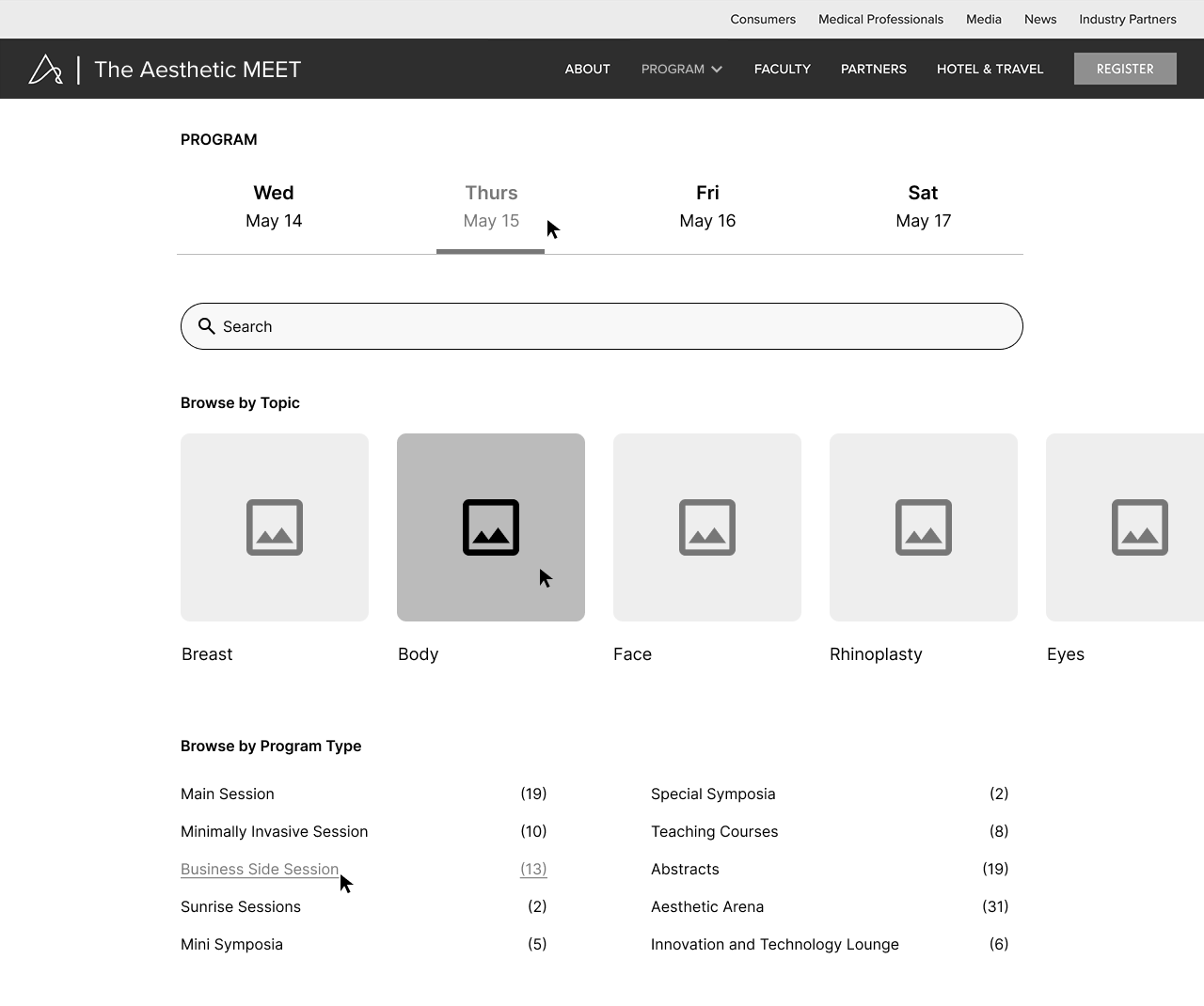
The Aesthetic Society’s website plays a critical role in how members discover, evaluate, and engage with educational programs, sessions, and speakers. However, the Program Area including overview pages, search and results, session details, and speaker profiles had grown difficult to navigate and inconsistent in structure. Members struggled to find relevant sessions efficiently, compare options, and understand session value, while internal teams lacked a validated UX foundation to support ongoing iteration and scale.
Solution
I led a seven-week UX engagement to evaluate, redesign, and validate improvements across the entire Program Area. The work focused on improving usability, accessibility, and visual clarity while aligning the experience with member expectations and organizational goals. Through research, restructuring, testing, and documentation, the engagement delivered a developer-ready UX solution and a strategic foundation for future enhancements.
My Role
Lead Strategist, Researcher and UX Designer, responsible for end-to-end discovery, design, validation, and handoff.
Key Responsibilities
Clarified business goals, KPIs, and technical constraints with stakeholders
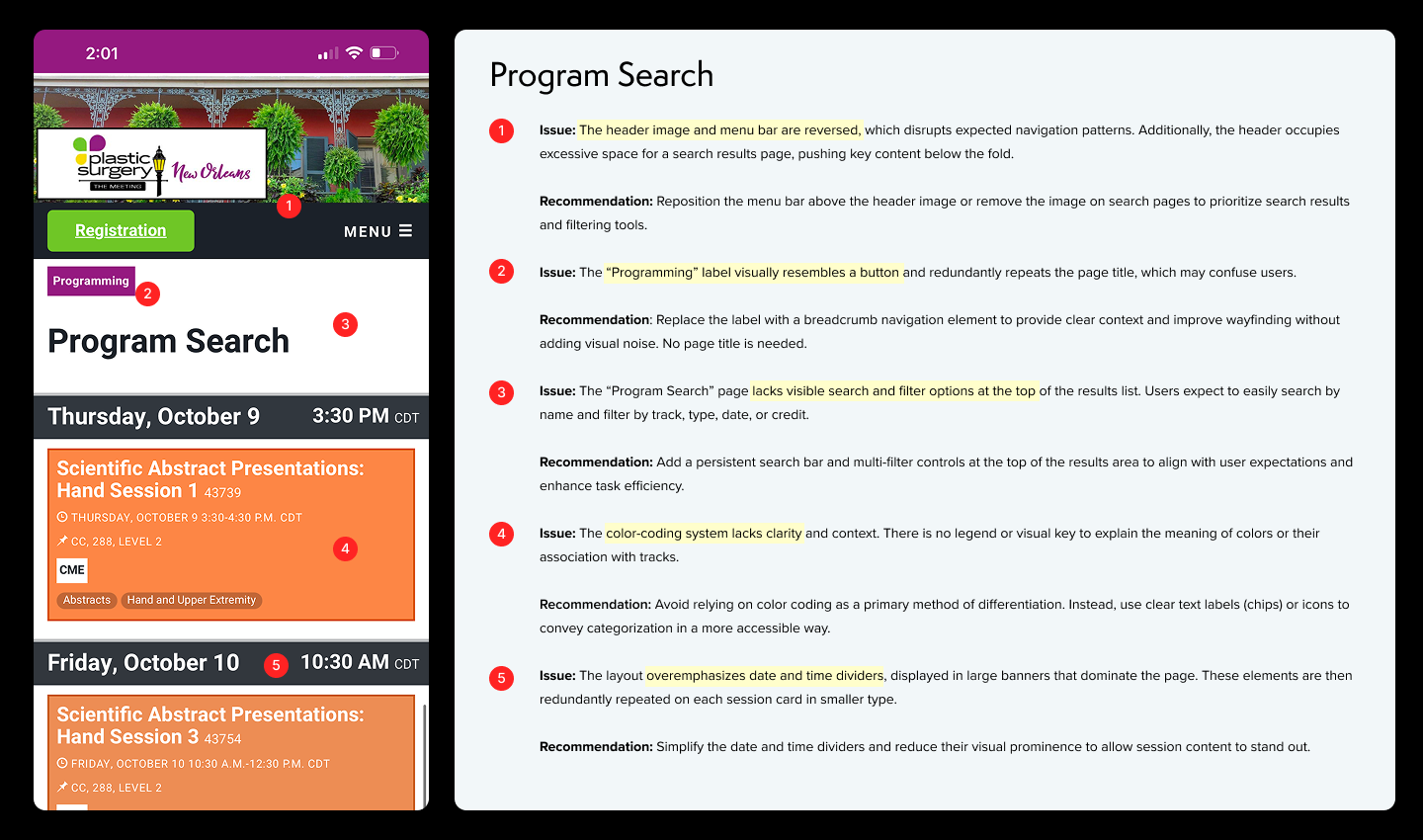
Conducted heuristic evaluation and competitive analysis of program discovery and content patterns
Defined information architecture and navigation models for Program Area pages
Designed low- to mid-fidelity wireframes (desktop and mobile)
Planned and moderated remote usability testing session
Synthesized findings into actionable recommendations
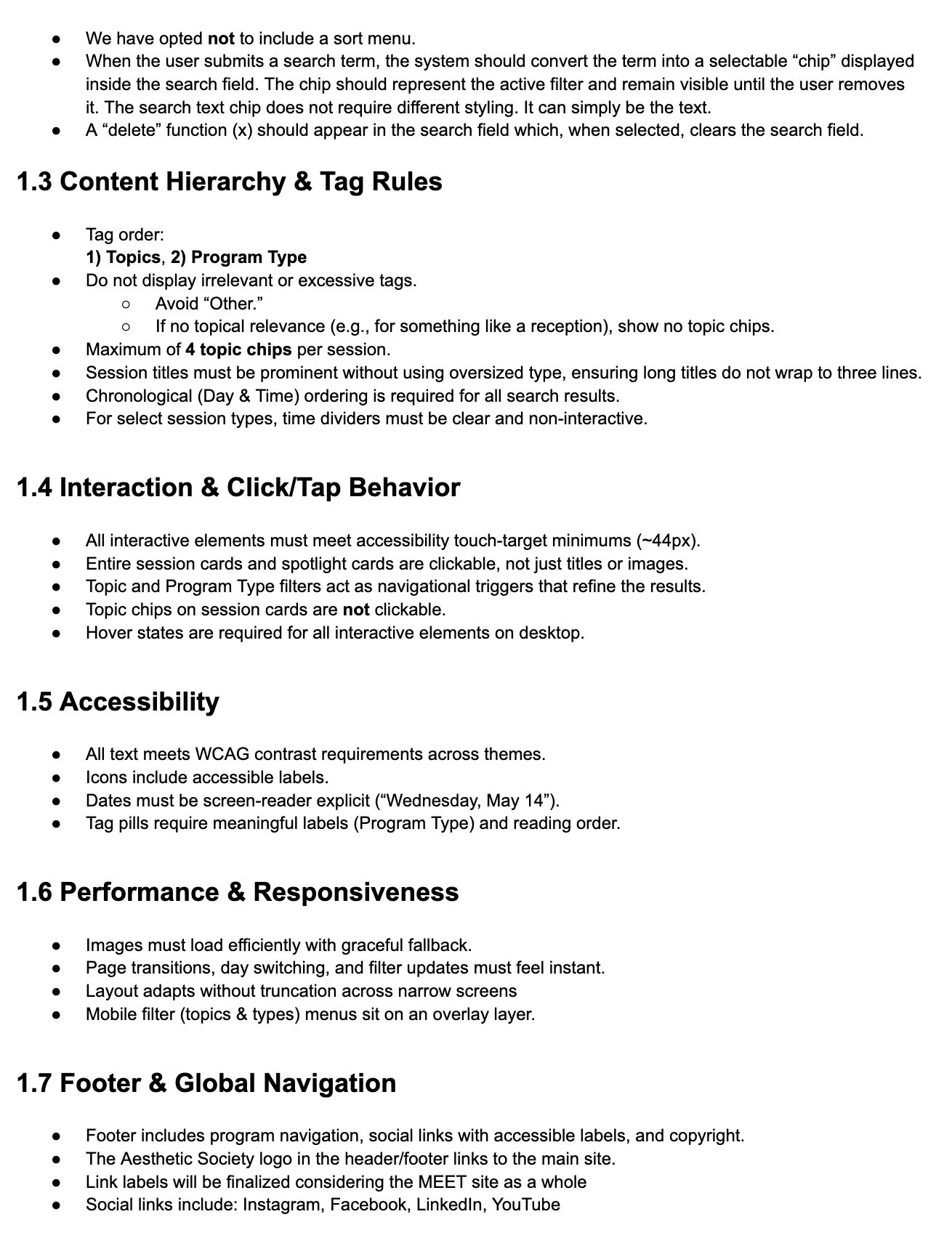
Translated approved designs into developer-ready specification
Supported implementation through design QA and launch preparation
CHALLENGE #1
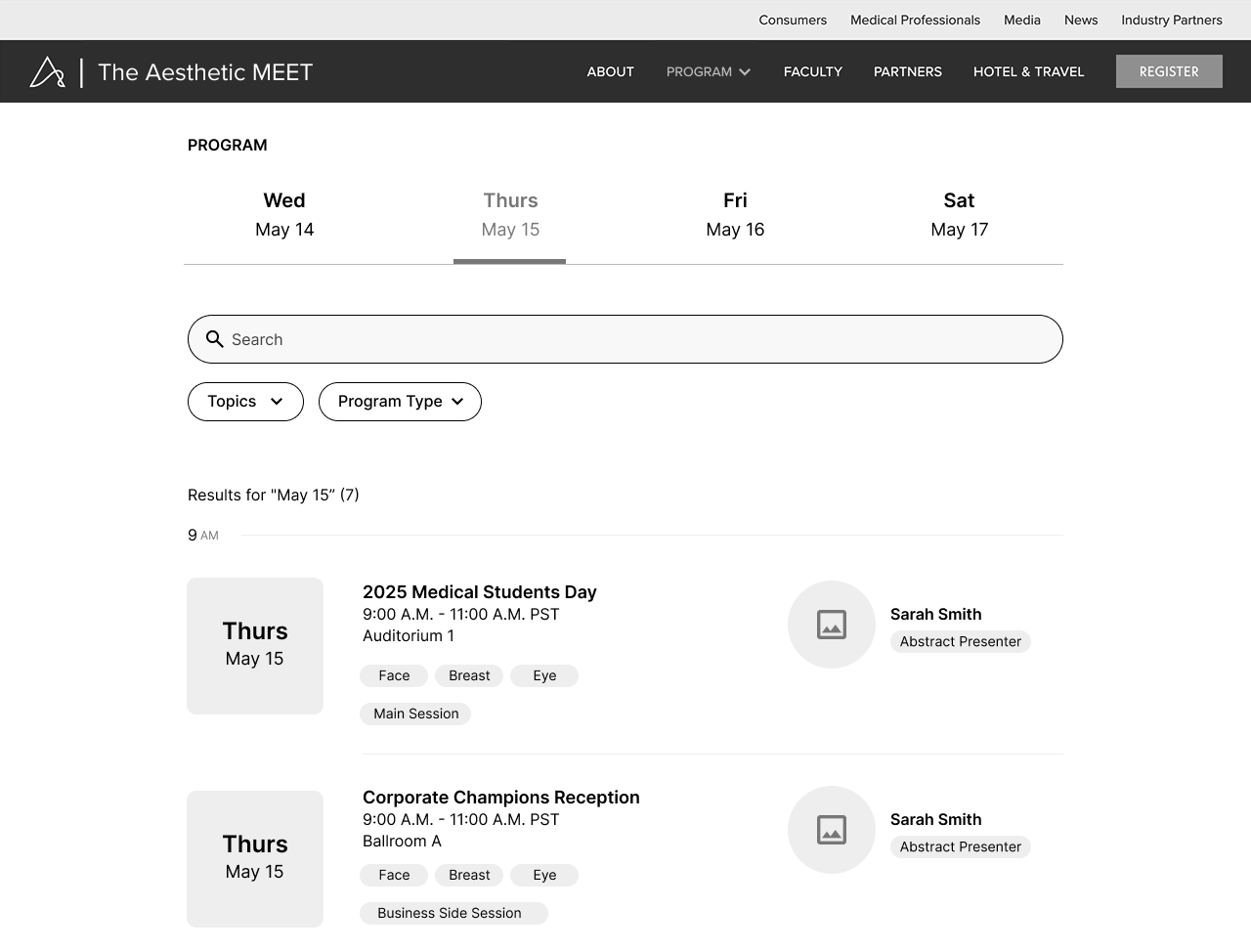
Program Discoverability and Search Friction
Members had difficulty finding relevant sessions due to lack of search and filtering, weak hierarchy, and inconsistent result presentation. The redesign focused on clarifying search behavior, improving result scanability, and aligning filters with how members actually evaluate programs.
CHALLENGE #2
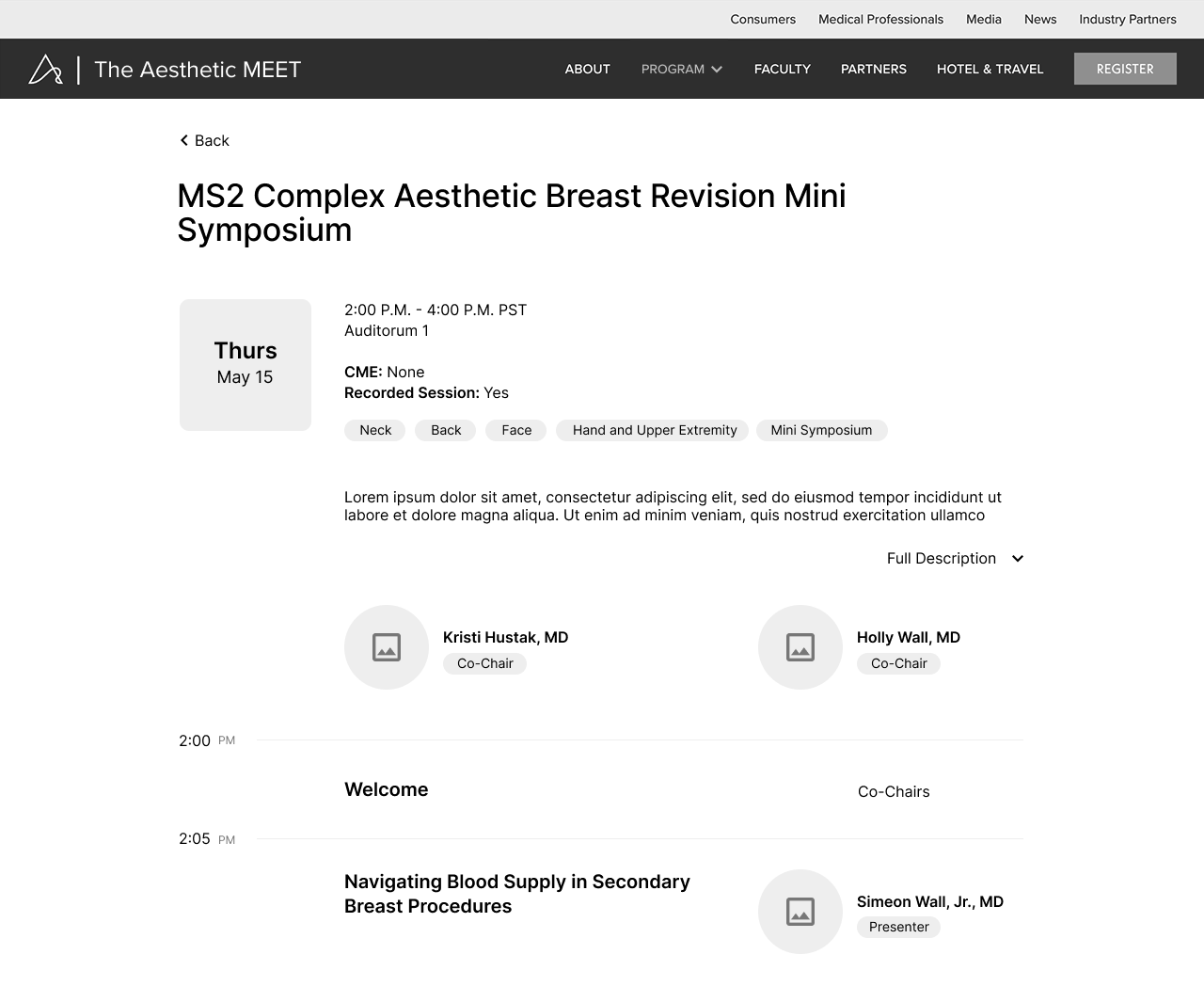
Inconsistent Session and Speaker Experiences
Session detail and speaker pages lacked a consistent structure, making it hard for users to compare sessions or understand speaker credibility at a glance. I introduced standardized content patterns and layouts that improved clarity, comparability, and trust.
CHALLENGE #3
Lack of Validation Before Development
Previous changes were often implemented without direct user validation, increasing rework risk. This engagement embedded usability testing mid-process, ensuring design decisions were grounded in real member behavior before development.

Dr. Haws, Board Certified Plastic Surgeon
Impact & Outcomes
By the end of the engagement, The Aesthetic Society received:
A validated, end-to-end UX solution for the Program Area
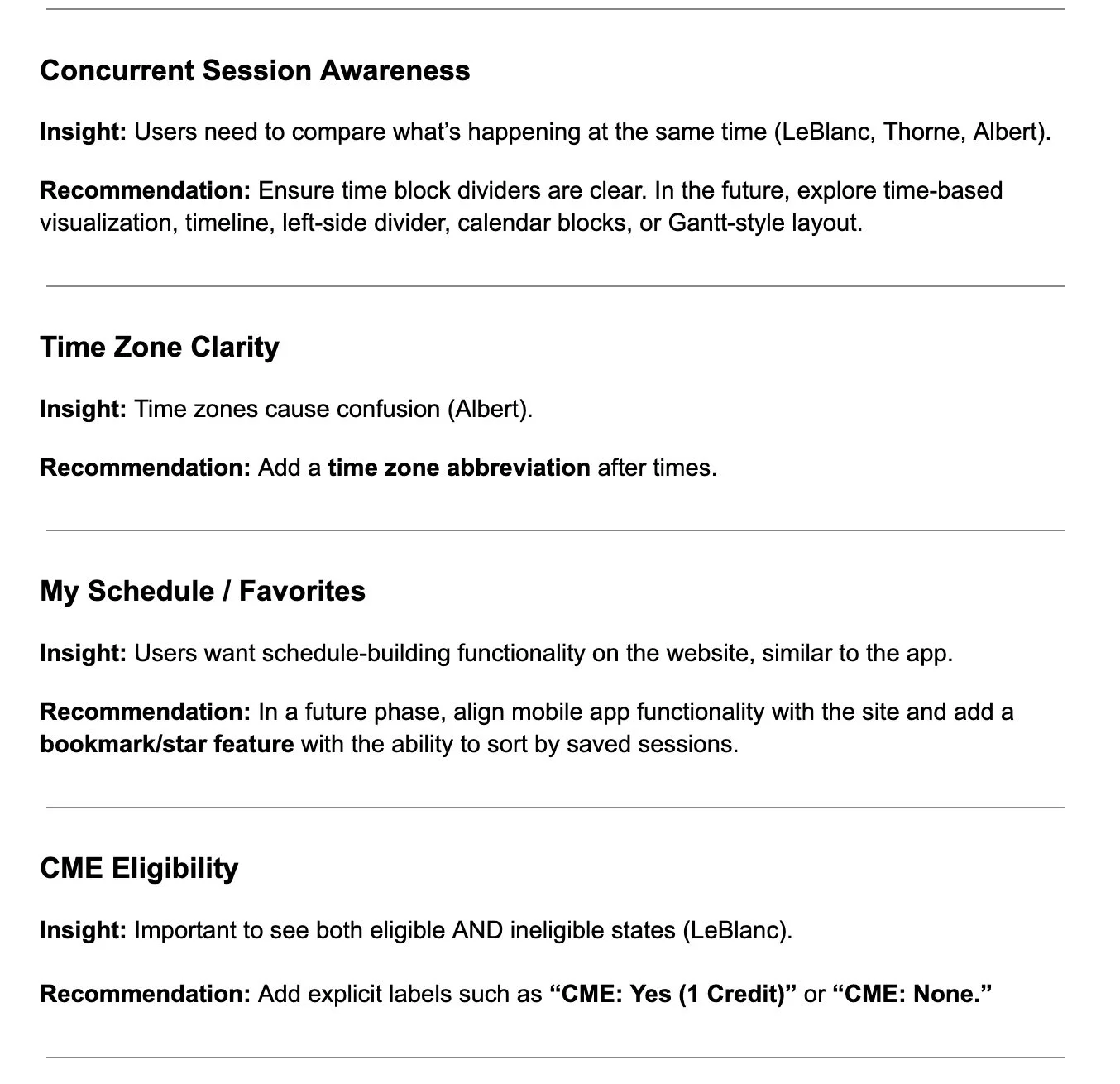
Clear documentation of member needs, friction points, and future opportunities
Desktop and mobile wireframes refined through usability testing
A handoff-ready Figma prototype with thorough development notes
QA guidance, support, and a post-launch iteration roadmap
The result was a clearer, more intuitive program experience that reduced cognitive load for members while giving internal teams a scalable, evidence-backed foundation for continued improvement.
Final Reflection
This project demonstrated the value of treating complex content ecosystems, like educational programs, not as static pages, but as decision-making tools. By combining early discovery, structural clarity, and usability validation, the work minimized downstream risk and ensured the final solution was both usable and buildable. The engagement left The Aesthetic Society with more than redesigned screens, it delivered a repeatable UX framework that can evolve alongside member needs and future program growth.